Showing posts with label Jews. Show all posts

Wednesday, June 29, 2011

Are Jewish Democrats Beginning to Say No To Obama ?

It seems as if everything is finally beginning to add up. According to several dozen interviews conducted by Politico, Americans of the Jewish faith are finally waking up to the fact that Barack Obama is not a friend of Israel. And the best efforts of Democratic spin-masters isn't going to change the truth.
David Ainsman really began to get worried about President Barack Obama’s standing with his fellow Jewish Democrats when a recent dinner with his wife and two other couples — all Obama voters in 2008 — nearly turned into a screaming match.

Ainsman, a prominent Democratic lawyer and Pittsburgh Jewish community leader, was trying to explain that Obama had just been offering Israel a bit of “tough love” in his May 19 speech on the Arab Spring. His friends disagreed — to say the least.

One said he had the sense that Obama “took the opportunity to throw Israel under the bus.” Another, who swore he wasn’t getting his information from the mutually despised Fox News, admitted he’d lost faith in the president.
But its not just this particular speech, it seems as if it is a cumulative effect of all of the times Obama has thrown Israel and its leaders under the bus since he was elected President.
“It’s less something specific than that these incidents keep on coming,” said Ainsman.
Ainsman is correct Obama's "war on Israel" began just a few days after inauguration and continued through his first year and even through today. For example, these are only some of the articles I wrote about Obama and Israel during his first months in office, and all this happened prior to his getting involved in the Israeli/Palestinian issue.

Politico reports that the recent speech was the straw that broke the Camel's back:
The immediate controversy sparked by the speech was Obama’s statement that Israel should embrace the country’s 1967 borders, with “land swaps,” as a basis for peace talks. Prime Minister Benjamin Netanyahu seized on the first half of that phrase and the threat of a return to what Israelis sometimes refer to as “Auschwitz borders.”
Ben Smith, the reporter who wrote the article believes that it is hard to resist the conclusion that some kind of tipping point has been reached.
Most of those interviewed were center-left American Jews and Obama supporters — and many of them Democratic donors. On some core issues involving Israel, they’re well to the left of Netanyahu and many Americans: They refer to the “West Bank,” not to “Judea and Samaria,” fervently supported the Oslo peace process and Israel’s unilateral withdrawal from Gaza and believe in the urgency of creating a Palestinian state.

But they are also fearful for Israel at a moment of turmoil in a hostile region when the moderate Palestinian Authority is joining forces with the militantly anti-Israel Hamas.

“It’s a hot time, because Israel is isolated in the world and, in particular, with the Obama administration putting pressure on Israel,” said Rabbi Neil Cooper, leader of Temple Beth Hillel-Beth El in Philadelphia’s Main Line suburbs, who recently lectured his large, politically connected congregation on avoiding turning Israel into a partisan issue.

Some of these traditional Democrats now say, to their own astonishment, that they’ll consider voting for a Republican in 2012. And many of those who continue to support Obama said they find themselves constantly on the defensive in conversations with friends.

“I’m hearing a tremendous amount of skittishness from pro-Israel voters who voted for Obama and now are questioning whether they did the right thing or not,” said Betsy Sheerr, the former head of an abortion-rights-supporting, pro-Israel PAC in Philadelphia, who said she continues to support Obama, with only mild reservations. “I’m hearing a lot of ‘Oh, if we’d only elected Hillary instead.’”

Mentally challenged Democratic National Committee Chairwoman Debbie Wasserman Schultz, told Smith detected a level of anxiety in a recent visit to a senior center in her South Florida district.
“They wanted some clarity on the president’s view,” she said. “I answered their questions and restored some confidence that maybe was a little shaky, [rebutted] misinformation and the inaccurate reporting about what was said.”
Of course the reporting was not inaccurate, like most Democrats in Congress, Wasserman-Shultz was defending her party's President. Well, either that or the reporting was
written above the third grade reading level.
“There’s an inclination in the community to not trust this president’s gut feel on Israel and every time he sets out on a path that’s troubling you do get this ‘ouch’ reaction from the Jewish Community because they’re distrustful of him,” said the president of a major national Jewish organization, who declined to be quoted by name to avoid endangering his ties to the White House.
Democrats argue that during this point of every presidential race there are arguments that this will be the year Jews abandon the Democratic party.  Truthfully, the only time that actually happened was the reelection campaign of Jimmy Carter.
“When Obama was running, there was a lot of concern among the guys in my group at shul, who are all late-30s to mid-40s, who I hang out with and daven with and go to dinner with, about Obama,” recalled Scott Matasar, a Cleveland lawyer who’s active in Jewish organizations.

Matasar remembers his friends’ worries over whether Obama was “going to be OK for Israel.” But then Obama met with the community’s leaders during a swing through Cleveland in the primary, and the rabbi at the denominationally conservative synagogue Matasar attends — “a real ardent Zionist and Israel defender” — came back to synagogue convinced.
Obama was aided in the turn-around by prominent Jews such as former NY Mayor Ed Koch and New Republic Editor Marty Peretz who gave the candidate a "Kosher on Israel" certificate. They will not be supporting Obama this time.
Now Matasar says he’s appalled by Obama’s “rookie mistakes and bumbling” and the reported marginalization of a veteran peace negotiator, Dennis Ross, in favor of aides who back a tougher line on Netanyahu. He’s the most pro-Obama member of his social circle but is finding the president harder to defend.
...A Philadelphia Democrat and pro-Israel activist, Joe Wolfson, recalled a similar progression.

“What got me past Obama in the recent election was Dennis Ross — I heard him speak in Philadelphia and I had many of my concerns allayed,” Wolfson said. “Now, I think I’m like many pro-Israel Democrats now who are looking to see whether we can vote Republican.”
Its not just the votes, this "Jewish Awakening" will also hurt him in the pocketbook.
A top-dollar Washington fundraiser aimed at Jewish donors in Miami last week raised more than $1 million from 80 people, and while one prominent Jewish activist said the DNC had to scramble to fill seats, seven-figure fundraisers are hard to sneer at.
People involved in the Philadelphia event, however, said they think Jewish doubts are taking a fund raising toll.
“We’re going to raise a ton of money, but I don’t know if we’re going to hit our goals,” said Daniel Berger, a lawyer who is firmly in the “peace camp” and said he blamed the controversy on Netanyahu’s intransigence.
The bottom line is that even hard core pro-Israel Jews do not vote on only one issue. Certainly Israel wasn't the only reason that 55% of American Jews voted against Jimmy Carter in 1980.  But, just as what happened 31 years ago, Barack Obama's anti-Israel policies are causing liberal Jews to take the rose-tint off their glasses and evaluate what has happened since January 2009, domestically, his foreign policy and his policy toward the Jewish state, and what they see is not very positive.

Lets just hope the trend continues because in the end a one-term Obama Presidency would be the best thing for America.
Enhanced by Zemanta

Monday, June 27, 2011

OMG! Helen Thomas Wants Back into the White House Press Corps

Sheeee's Baaaaaaaaaaaaack! Or at least she wants to be back.   Helen Thomas made an appearance at the Busboys & Poets bookstore in Washington, D.C.  yesterday, and said she is ready for a comeback. She wants to return to the White House briefing room.
“Nothing can replace being there when you’re a reporter,” Thomas said. “Seeing with your own eyes — no, nothing can replace that. I was very lucky to cover history for so long.”
Thomas forced out of her job last June when a video first seen on this website came to light, where she told the Israeli Jews to "get the hell out of Palestine and go back to Germany and Poland.  
Anas “Andy” Shallal, the owner of Busboys & Poets and moderator for her appearance Sunday, followed up by asking her if she had reapplied for those credentials. According to Thomas, she said she had but hadn’t gotten an official response and assumed she had been denied.

“In a back way,” Thomas said. “I’ve been denied – I think so, I never heard.”
The words made to Rabbi Nesenoff last  June was even the worst of it.  Just a few months later in a speech made to a Muslim Anti-Bias conference Thomas used almost every anti-Semitic stereotype in the book.
"I paid the price for that," said Thomas, a longtime White House correspondent. "But it was worth it, to speak the truth. The Zionists have to understand that's their country, too. Palestinians were there long before any European Zionists."
Thomas claimed that "You can not say anything (critical) about Israel in this country."
That was the nicest thing Thomas said all night. In her speech about about discrimination against Arabs she launched into an anti-Semitic tirade about how those rich Jews control America
In a speech that drew a standing ovation, Thomas talked about "the whole question of money involved in politics."

"We are owned by propagandists against the Arabs. There's no question about that. Congress, the White House, and Hollywood, Wall Street, are owned by the Zionists. No question in my opinion. They put their money where there mouth is…We're being pushed into a wrong direction in every way.
It was almost as if Thomas was reading directly from the Protocols of the Elders of Zion, at an anti-Bias conference!!!

During her interview and speech, Thomas often used the term "Zionists" negatively, saying that Dennis Ross, President Obama's adviser to the Middle East, was a Zionist.

"Obama, he puts in charge for the Arab world a Zionist like Dennis Ross…You don't put a Zionist in charge of the Muslim world in the White House."

Below is the video of the Speech.


There are some people who believe that any criticism of Israel is Antisemitism. That belief is as ignorant as Antisemitism itself. There is however, a great deal of crossover between hatred of Israel and hatred of the Jews. To find out what people really mean you need to examine the words they use. Make no mistake about it, Thomas uttered the word "Zionists" but her words showed that she meant the word "Jews."  What Thomas said in December and again in her Playboy interview, that Congress, the White House, Hollywood and Wall Street are owned by Zionists, was a repetition of the anti-Semitic stereotypes that have been used for centuries to incite hatred of Jews. Ms. Thomas is nothing but a bigoted hater and that was the reason she was fired, not because she hates Israel (although most of the progressive media is anti-Israel). Thomas was canned because she is a low-life hater, an anti-Semite and she should not be allowed back into the White House press corps, nor should any other bigot.


Enhanced by Zemanta

Thursday, June 23, 2011

DELTA Airlines: No Jews Allowed

http://news.flightsmaster.co.uk/wp-content/uploads/2010/10/delta-airlines.jpg

Ladies and Gentlemen we are no approaching Saudi Arabia, the Captain has turned on the no Jews light.
Delta Airlines, in its new alliance with Saudi Arabian Airlines, is making a deal with the devil...no Jews, no Bibles on board flight to the desert kingdom. Jews are not allowed to enter the supposedly moderate Muslim nation and neither are non-Muslim religious articles. Delta doesn't fly to Saudi Arabia but next year it will have a new code-sharing agreement with Saudi Arabian Airlines which means folks may be booking through Delta but flying on Saudi Arabian Air.

According to the Airline, if it wants to deny Israelis, people with Jewish surnames, and religious articles that are not Islamic entry to their borders, it's not Delta's fault, in the airline's view.

According to World Net Daily an offended customer who took the issue to Delta mangement got a reply from Kathy M. Johnston, a coordinator for the airline's "Customer Care" saying:
Delta must also comply with all applicable laws in every country it serves and by the same token passengers are responsible to obtain the necessary travel documents required for entry into another country prior to their day of travel...If a passenger travels without proper documents, the passenger may be denied entry into that country and our airline may be fined. Delta assumes responsibility for ensuring that each passenger boarding our aircraft has the proper documents for travel to their ticketed destination.
Sure and the people running Concentration Camps were just following orders. Look, it's not Delta's fault that the Saudi government is anti-Semitic, but it doesn't have to go along with it. No one is holding a gun to Delta Airlines head demanding that they included Saudi Arabian Airlines into its Sky Team Alliance.

The interesting part was if a country banned Muslims from traveling into their country or people of color the mainstream media would be all over this.  Sadly because its "only Jews" this story will be ignored.

I for one will take the ban to heart, even though I have no intentions of flying to Saudi Arabia in the near future, this Jew will not fly on any Delta Airlines Flights... to Saudi Arabia or anywhere else, as long as they give in to this anti-Semitic directive.

If you would like to call or email Delta and give them your opinion on their discriminatory program the information is below:

customer-care@delta.com

800-221-1212 (keep saying help until you get moved to a representative)
Enhanced by Zemanta

Tuesday, June 21, 2011

Obama Meets With Jewish Donors (The President Doth Protest Too Much, Methinks)

By Barry Rubin

Speaking to Jewish donors (or should we say possible Jewish donors?) to his presidential campaign, President Barack Obama pledged that his administration would “devote all of its creative powers” to trying to bring about Mideast peace.

This is not an art project. What is needed is not “creative powers” but to deal with the actual, real situation. To me, “creative powers” (Samantha creative Powers?) means to come up with gimmicks, to do anything possible to bring about the supposed signing of a peace of paper [pun] as fast as possible. If they know the Palestinian Authority is inflexible, then they will just demand more concessions from Israel. And they won’t bother to ask whether the “peace agreement” they are pushing would last a month or produce a more stable region and a more secure Israel.

Every time Obama says that the “status quo is unsustainable,” he’s suggesting that anything would be better than the status quo. What he would produce, then, is a worse status quo.

Meanwhile, as if to prove the point, Palestinian Authority leader Mahmoud Abbas said he would drop seeking UN approval of unilateral Palestinian independence if the United States offers something better: “I don’t know if the U.S. has another option, but if it does, we will not go to the U.N..”

This is a beautiful example of Palestinian leaders’ chutzpah disguised as victimhood. Let’s consider the following points:

1. The Palestinian bid at the UN will fail. Abbas knows this. Therefore, he is asking to be given a better offer to a situation where he’d get nothing.

2. This strategy breaks every previous Palestinian Authority commitment but he wants to be paid for abandoning it.

3. The Palestinian Authority has refused to negotiate with Israel for 2.5 years yet has faced no pressure or punishment for its behavior. Now he wants to be given more.

4. The Palestinian Authority has partnered with Hamas, a genocidal antisemitic terrorist group that is aligned against U.S. interests and rejects peace with Israel, and the Palestinian Authority has faced no pressure or punishment for its behavior. Yet Abbas wants U.S. concessions to a PA in which Hamas is a full partner. (Whether the coalition collapses in future that is what the United States is dealing with at this time.) Does it bother anyone that the PA is ready to take on as equal partner a group that openly says that Jews have caused all major wars, seek to control the world, and should be wiped out by murdering all of them? Does it bother anyone that the Obama Administration has not cut off all relations or even support of the PA until it ends this partnership? Let’s face it, the only reason the current U.S. government isn’t dealing directly with Hamas is because of public and congressional opposition.

5. The U.S. government allows Abbas to put the blame on itself and promises to try harder, rush faster, and offer more rather than slapping him and the PA down for their intransigence, behavior, and lack of cooperation.

In other words, Abbas is acting as if he’s doing the United States a favor by taking its money, diplomatic support, and flattery when he does absolutely nothing in return, and then demands even more!

And the Obama Administration lets him get away with it.

Barry Rubin is director of the Global Research in International Affairs (GLORIA) Center, editor of the Middle East Review of International Affairs (MERIA) Journal, and a featured columnist at PajamasMedia http://pajamasmedia.com/barryrubin/ His latest books are The Israel-Arab Reader (seventh edition), The Long War for Freedom: The Arab Struggle for Democracy in the Middle East (Wiley), and The Truth About Syria (Palgrave-Macmillan). The website of the GLORIA Center is http://www.gloria-center.org. His PajamaMedia columns are teased and other articles are available at http://www.rubinreports.blogspot.com/.  

Monday, June 13, 2011

Obama’s Israel Policy: “F*** The Jews, They Will Vote For Us Anyway!”

President Obama gave Bibi Netanyahu an ultimatum on renewing negotiations with the Palestinians, according to reports cited by Israel Radio Sunday morning. According to the ultimatum, Netanyahu has to decide within a month whether he agrees to accept President Barack Obama's platform and resume talks based on 1967 lines.

The President has been working on getting the leaders of major Jewish organizations on their side realizing that some of them, such as Abe Foxman of the ADL are more concerned about advancing their power in the progressive political world than their organization’s Jewish mission.

According to Eli Lake of the Washington Times the Obama White House appealed to Jewish leaders on Friday that the request of Israel was part of an effort to head off Palestinian plans to declare an independent state at the United Nations

Defenders of the President insist that the President’s “1967 borders with land swaps” is nothing new. But it certainly is.

As Jennifer Rubin reported in the Washington Post, “On Saturday I asked a State Department official authorized only to speak on background: Does “1967 borders with land swaps” mean “1967 and then we discuss swaps” or does it mean “1967 borders plus the swaps that the parties previously agreed to in negotiations including the Jerusalem suburbs”? The latter, I pointed out is consistent with the 2004 Bush-Sharon letters, but the former is not. In fact, if it is 1967 and then they discuss land swaps, that is the same as starting with the 1967 borders. Period. And sure enough the State Department official told me, “It means swaps that the parties will agree on in the course of direct negotiations.”

In other words, Obama wants Israel to start negotiating under the assumption that that the Kotel, the old city and the Jerusalem suburbs are Palestinian property, cancelling up prior understandings that these areas would never be part of a Palestinian state. That has never before been the U.S. government’s demand, and it weakens Israel’s bargaining position.” In other words, there is zero difference in the Obama plan between “1967 borders” and “1967 border with land swaps.” In both, the starting point is borders Israel has deemed indefensible.

At the same time President Obama has not made similar demands of the Palestinians, not even requesting the most basic of concessions that the Palestinians recognize Israel as the Jewish State.  When you put it all together, Obama is asking Israel to make concessions with a government which is comprised of two terrorist organizations bent on its destruction, Fatah makes their calls for Israel’s destruction in Arabic only, and Hamas who calls for the destruction of Israel is clear in any language.

It’s time for the President to remember the famous words of Albert Einstein “Insanity is doing the same thing over and over and expecting a different result.” The last time Obama called for one-sided concessions by Israel (the settlement freeze), the only result was a break off in talks because the Palestinians used the administration’s demands as preconditions for further talks. The bottom line is that the Palestinian Authority is not ready to sign a peace deal that recognizes Israel as a Jewish State, whether the boarders are the 1948 armistice lines or the small UN Mandate borders.

Supposedly Obama is making the demands because he does not want to be forced to veto the unilateral Palestinian Statehood declaration in September. The truth is that the Palestinians are well aware their unilateral statehood push has no chance; its only purpose is to continue the international de-legitimization of Israel. Obama’s demand for the 67 lines as a starting point is serving the same purpose, because there is no way Israel can agree to it. An Israeli concession on borders prior to talks even start robs them of their one bargaining chip. And there is no corresponding Palestinian concession.

But that is not a concern of the President, almost every action he as taken since his inauguration indicates that he is not a big friend of the Jewish State, despite the support he has gotten from the progressive leadership of the major Jewish organizations.

Unfortunately it looks as if the administration will be able to have it both ways. While the President’s strategy is being exposed here and in much of the conservative media, the progressive mainstream media, most of the Jewish press, normally pro-Israel democratic legislators and even leaders of major Jewish organizations are reluctant to stand in front of the camera and break with their progressive meal ticket Barack Obama.


During the administration of George H.W. Bush, probably the most anti-Israel American presidency prior to this one, Secretary of State James Baker once commented on whether his anti-Israel stance will hurt the Jewish vote for Bush’s reelection campaign. His famous response was, “F*** the Jews, they won’t vote for us any way.”  Today the administration of Barack Obama has a similar attitude, “F*** the Jews, they will vote for us whatever we do!”

Sadly they are probably right.  Jewish money still pours into Democratic Party coffers even though the President from their party is the most anti-Israel in history, and the legislators are two cowardly to confront him in public.  Hopefully when it comes time to vote in 2012, American Jews will wake up and smell the hummus. If this administration is this anti-Israel in the middle of a re-election campaign, I shudder to think what will happen during a second, lame duck campaign when he no longer needs any Jewish support.

Sunday, June 12, 2011

Obama Trying To Force Israel To Negotiate With PA-Hamas Govt. On Obama's Terms

According to a report in the Washington Times, President Obama is working hard to get the Israeli government  to publicly adopt President Obama’s view that Israel’s pre-1967 border should be the basis for future peace talks. And for help, he is going to leaders of American Jewish organizations, who tend to put progressive politics in front of everything else.  According to Eli Lake of the Times

The Obama White House appealed to Jewish leaders on Friday that the request of Israel was part of an effort to head off Palestinian plans to declare an independent state at the United Nations in September.

The request of Mr. Netanyahu was made Monday to the prime minister’s top peace negotiator, Yitzhak Molcho, at a meeting with Secretary of State Hillary Clinton at the National Security Council, according to an Israeli diplomat based in Jerusalem.
.....Steven Simon, the new White House National Security Council senior director for the Middle East and North Africa, told representatives of the Jewish Community Friday during a conference call that the White House was looking to get both the Palestinian Authority and the Israeli government to adopt Mr. Obama’s “principles as a basis for negotiation,” according to a recording of the call played for the Washington Times.
Mr. Obama’s position is “the borders of Israel and Palestine should be based on the 1967 lines with mutually agreed swaps.”
Interestingly Obama's position  does not make demands of Palestinians. He is trying to force Israel to negotiate with a Palestinian government that includes Hamas. And a government where neither of the ruling parties Hamas or Fatah are willing to recognize Israel as the Jewish State.

According to Jennifer Rubin, Israel supporters in Congress are fuming.
A spokesman for Sen. Orrin Hatch (R-Utah) conveyed the senator’s view: “The president’s insistence last month that Israel return to the pre-1967 borders represented a significant departure from past U.S. policy and has been roundly repudiated by members of both parties. Given this lack of support, even from his own party, it is inconceivable why the President would continue to undermine the position of our democratic ally Israel in its negotiations with a hostile neighbor.”

I spoke to Rep. Peter King (R-N.Y.), who plainly was angry over the continued effort to bully Israel. He said in a phone interview, “President Obama never learns. His real instinct is to weaken Israel. You don’t treat an ally this way.” He said he has never seen this sort of behavior from any U.S. president. After the apparent “rapprochement” following the Arab Spring speech, King says the current posture is “shameful.” Given the strong support in the Congress for Israel, will there be resolutions or a cutoff of funding for the Palestinians? He said firmly that it is time to start “fighting fire with fire.” In other words, as much as Obama seeks to pressure Israel while whispering vague promises to the American Jewish community, the Congress may very well try to recalibrate the balance. We should at least have one branch of government in our ally’s corner, right?
According to Jpost Obama has given Netanyahu an ultimatum:

The United States gave Netanyahu an ultimatum on renewing negotiations with the Palestinians, according to reports cited by Israel Radio Sunday morning.

According to the ultimatum, Netanyahu has to decide within a month whether he agrees to accept US President Barack Obama's platform and resume talks based on 1967 lines.

Meanwhile, Netanyahu was expected to travel to Italy on Sunday where he will meet his Italian counterpart Silvio Berlusconi.

Let's see if the leaders of Jewish organizations join in on criticizing Obama's anti-Israel stance or, like Abe Foxman of the ADL, will the put progressive politics in front of doing the right thing when it comes to protecting America's only ally in the Middle East.
Enhanced by Zemanta

Friday, June 10, 2011

Updated but Question Remains--Is Russell Crowe Anti-Semitic or Just Stupid?

Between the controversy surrounding the proposed local laws in California against circumcision. and the Weinergate scandal, so far the month of June can be called the month of the schmeckel (Yiddish for penis).  There has been more schmeckel talk in the main stream media over the past two weeks, than occurs in an eighth grade lunch room in an all-boys school during the course of an entire school year.

Thankfully there will probably be no more Weiner's wiener pictures released (even though the nightmares remain), and after a leader of the anti-circumcision movement published a blatantly anti-Semitic comic book (called Foreskin Man), the ballot initiative to ban childhood circumcision Santa Monica was dropped. The San Francisco initiative still remains on the ballot.
Sadly the movement against circumcision is not over and Academy Award winning actor Russell Crow, has decided to join in on the "fun" with an anti-circumcision rant on twitter.
A Crowe follower told the Australian celebrity that he was expecting a son soon, and asked for his input on whether he should have his baby circumcised.

Crowe responded harshly, saying that "circumcision is barbaric and stupid. Who are you to correct nature? Is it real that GOD requires a donation of foreskin?"

The actor added that "babies are perfect" when they are born. Crowe later said that he "will always stand for the perfection of babies, I will always believe in God, not man's interpretation of what God requires."

One follower asked if he was "comparing sexual mutilation w/ a jewish ceremonial act?!” Crowe wrote: "Can you actually read the words you just typed 'a ceremonial act', F--- that. The Mayans had ceremonial acts too.”

Mr. Crowe should know that throwing a telephone at an employee of the Mercer Hotel is barbaric and stupid, circumcision is not, it is part of a both Jewish and Muslim religious practice.

Many Jewish practices do originate from Rabbinical interpretation of what is written in the Torah, such as not eating milk with mean (Rabbis got that from the Torah saying "Do not boil a kid in its mother's milk)

On the other hand circumcision is directly commanded in the Torah, the five books of Moses. The command for circumcision is in the appears  in  Bereisheet (the Jewish name for the book of Genesis)
You shall circumcise the flesh of your foreskin, as a sign of the covenant between Me and you. At the age of eight days, you shall circumcise every male child born to you throughout the generations ...Bereisheet 17:11-1
This is not as Mr. Crowe says an  interpretation of what God wants, but according to Jews and Muslims it is a direct order right there in ink and parchment. From what I understand from my Christian friends,  they too believe that the Torah is the word of God (but order's such as circumcision apply only to Jews in the "old Testament")

Where there is interpretation is why God ordered Jews to circumcise their son's at eight-days-old. One interpretation given by the Rabbis is that males are  not born perfect on purpose.  The reason for circumcision is to give fathers (the parent who is ordered to conduct the ritual) is to allow them to have a greater participation in the act of creation.  We believe that God has a huge role, and the mother's obviously have the role of developing the baby within her body, through the act of Brit Milah (the circumcision ceremony) dad has the role of adding the final touch, making the boy perfect.
Several followers responded to Crowe's remarks, using scientific and hygienic explanations to justify circumcision. The actor rebuffed them, saying that "'human' science has caused too much damage," calling the follower "a moron". In response to claims that circumcision is hygienic the actor scoffed, saying "why don't you sew up your ass then?"
Maybe Mr. Crow should sew up his fingers before his stupidity continues. It is an established scientific fact that circumcision helps prevent HIV.
The actor pointed out what he believes to be a double standard, saying it is "interesting that female circumcision is widely considered barbaric, while male circumcision is so widely accepted."
Perhaps it has been a long time since Mr. Crowe saw a woman naked (which may be why he is so cranky), so allow me to refresh his memory....females parts are different than male ones.

The female circumcision argument is often presented by the anti-circumcision forces. Female genital cutting, a controversial practice that usually involves the removal of the clitoris, is illegal in the United States.  Female circumcision  is designed to take away sexual pleasure from women, male circumcision does not reduce sensation (you will have to trust me on that one).

Per the explanation I gave above, according to the Rabbis, it is males who are born imperfect, not females so there is no need for female circumcision. As far as permanent injuries during the practice, thankfully they are very very few and far between (although after my Bris at eight days old, I could not walk for over a year, the same thing happened with my son).


Crowe clarified that he is not anti-Semitic, saying he loves his Jewish friends with their "apples and the honey and the funny little hats". However, he implored them to stop "cutting" their babies.
He may not be anti-Semitic but he is certainly insensitive. The reader is half expecting him to say  "some of his best friends wear those funny little hats."

Crowe's argument is reminiscent of the Hellenist philosophy behind the Chanukah story.  The Hellenists "worshiped" the human form, it was the essence of perfection. The story of the Maccabees begins with the  Greeks banning circumcision, which led to a bloody revolt. The Romans banned circumcision after the destruction of Jerusalem in the year 70.

The Hebrew word for ritual circumcision, Brit Milah , literally means "covenant of circumcision." It is a covenantal act that Jews have practiced since the time of the Patriarch Abraham more than 3,500 years ago. It reflects a commitment to God.

 Historically movements to ban circumcision are centered in attempts to move the Jewish commitment from God and refocus it on man. In fact almost every campaign to destroy the Jewish people started with a ban on circumcision, which is followed by a ban on kosher slaughter and finally a ban on teaching Torah.
Whether they were meant to be anti-Jewish or not, both the SF Ballot initiative and Crowe's rant,  are fundamentally anti-Semitic,  as is the Dutch ban on kosher slaughter and the movements across Europe to ban kosher meat.

Although I would argue that their intent is more nefarious, even if you give them the benefit of the doubt and believe their intent to be Humanist or Hellenistic the end result is banning key Jewish rituals and practice.

As for Crowe, if he is truly not anti-Semitic,  he should do research on the issue and understand, prior to starting to rant against it. Based on his tweets he either a hater, too stupid to think before he tweets.

UPDATE: Two Developments since this post first went up. Crowe's friend Eli Roth went all out trying to defend his buddy against charges of Antisemitism


Roth is talking about the line with the funny hat, apples and honey, and stop cutting your babies, which was made to Roth. Allow me to suggest that not only wasn't it funny but giving him the benefit of the doubt, a line like that should be made via direct message not an open tweet.

Crowe removed the anti-Circumcision rants from his site and apologized for the insensitive comments publicly made to Roth, adding:

  • "I have a deep and abiding love for all people of all nationalities, I'm very sorry that I have said things on here that have caused distress."
  • "My personal beliefs aside I realize that some will interpret this debate as me mocking the rituals and traditions of others. I am very sorry."
None of this changes the conclusion made above.  The fight against circumcision is an attempt to draw people away from God.  My criticism of Crowe was not based on his remarks to his buddy Roth but on his outburst against circumcision and I suggested that  he should do research on an issue and try to understand it, prior to starting to rant against it. Based in his rants he understood neither the reasons why Brit Milah is important the Jews, not the history of  circumcision bans leading to major waves of Antisemitism.  If he understood the background and still made those comments then he is a hater. Should he have made the comments in the absence of any knowledge lets just say he doesn't have a beautiful mind just simple one.

Hence the question in the title, is he anti-Semitic or just stupid, I leave the answer up to the  reader.
Enhanced by Zemanta

Sunday, June 5, 2011

Six-Day-War Revisionist History

"The Jewish people has had to fight unceasingly to keep itself alive," says Israel's Premier Levi Eshkol. "Hopeful ever of redemption, we labored to return to the land of our fathers and to set foundations for the resurgence of an exiled folk. We made our arduous way to the shores of that land. We fought to open its gates to our brethren. We acted from an instinct to save the soul of a people." 

Both the land and the soul of Israel are sorely tried. Last week, 19 years after the Diaspora dream of return to Zion became a reality in the first Jewish state in almost 2,000 years, Levi Eshkol and his people found themselves besieged and threatened as few nations have ever been in their history. Tiny, dagger-shaped Israel, whose 2,700,000 people cling to 7,993 sq. mi. on the shores of the eastern Mediterranean, faced the implacable hostility and cocked guns of 14 Arab nations and their 110 million people. Its borders were ringed with Arab troops on all sides; its important sea access through the Gulf of Aqaba remained blocked by Egyptian mines and patrol boats.
Time Magazine June 9th 1967

Reading reports about the Six-Day-War from 44-years ago and comparing them to today reminds me of one of those Star Trek episodes where Kirk and the crew goes back in history and change the past---it seems like two different wars.

Forty-four years ago the reports spoke of the underdog Israel and her need to defend herself against the warlike acts of the big bullies lead by Egypt who was committing many acts that could be interpreted as acts of war including: conspiring with other belligerent countries  for a coordinated attack (in this case, Syria and Jordan), closing Israel’s access to international waterways (the straits of Tiran), violating the terms of the 1956 armistice by re-militarizing the Sinai. Expelling the UN and USA peace-keeping troops form the Sinai, perpetrating illegal spy-plane fly-overs to reconnoiter Israeli sensitive areas and massing troops and tanks on Israel’s borders.

(Dewy Beats Truman?)
The United States tried to prevent the war through negotiations, but the other side did not want peace, The US could not persuade Nasser or the other Arab states to cease their belligerent statements and actions (back then they tried). So just like today,  they warned Israel not to attack. Right before the war, President Johnson warned: “Israel will not be alone unless it decides to go alone.” Then, when the war began, the State Department announced: “Our position is neutral in thought, word and deed.”

While the Arabs were falsely accusing the United States of airlifting supplies to Israel, Johnson imposed an arms embargo on the region (France, Israel’s other main arms supplier, also embargoed arms to Israel). By contrast, the Soviets were supplying massive amounts of arms to the Arabs. Simultaneously, the armies of Kuwait, Algeria, Saudi Arabia and Iraq were contributing troops and arms to the Egyptian, Syrian and Jordanian fronts.

Today, retrospectives tell a different story, the tale of the cynical Zionist nation whe saw an opportunity to deal a blow to the Arab nation, expand her territory, and rule over the Palestinian people. Some even say that maybe the Six Day War was not the best thing for Israel, "since it lead her to become the evil rogue nation she is today"

But there is one indisputable fact that today's revisionist historians keeps forgetting, if Israel didn't fight and win the Six Day War---there would be no Israel today. Just as if Israel doesn't protect herself from the likes of Hamas, Hezbollah and Fatah today--there will be no Israel in 44  years.

In the immediate aftermath of the war, Israel offered to give everything except Jerusalem back in exchange for peace. Rather than respond to Israel’s invitation, the Arab states met in Khartoum, Sudan, for a conference in August, 1967. They unanimously decided in favor of the now famous three "NOs," better that Israel hold on to the territories taken in the war. Better that the refugees continue languishing in their squalor and misery. Better that the Arab states re-arm for another war…than to recognize Israel’s right to exist or negotiate toward a peaceful settlement of the conflict. For most of the Middle East, the rule is still the three "NOs": No recognition, No negotiation, No peace.

On 6/5/1967, in a pre-dawn raid, Israeli jets destroyed almost all the fighter planes of Egypt, Syria, Jordan and Iraq before their pilots could get them off the ground. With most of their air forces a smoldering wreck, the Arabs had lost the war almost as soon as it had begun. Arab armor without air cover was destroyed by Israeli planes; and Arab infantry without armor was no match for the Israeli land forces.  In six days, Israel re-gained the Sinai, drove the Jordan Legion from the West Bank, and took control of the Golan Heights within artillery range of Damascus.  Suddenly there was a new order in the Middle East.

Israel had done much more than is generally acknowledged to avoid this war.  It struck only after working for weeks under threat of annihilation to exhaust all reasonable diplomatic channels, and after begging the Arab states to honor their cease-fire agreements. But even more compelling, unnoticed by many but thoroughly documented in diplomatic archives is the communication between the Israeli government and King Hussein of Jordan. On Tuesday, June 5, several hours AFTER the Jordan Legion had begun its bombardment of Jerusalem and Petakh Tikvah, Israel sent a message via the Rumanian Embassy to King Hussein. The message was short and clear: stop the bombardment now and we will not invade the West Bank.

But King Hussein had already received a phone call from Nasser. This call was monitored by the Israeli Secret Service. Even though he knew that his air force was in ruins, Nasser told Hussein that Egyptian planes were over Tel Aviv and his armor was advancing on Israeli positions. Hussein believed him, and disregarded Israel’s plea. Had Hussein listened to Israel, the West Bank would still be in Jordanian hands.  Instead, he sent his troops into the Israeli section of Jerusalem.  Only AFTER its territorial integrity in Jerusalem was violated did Israel mount an assault on the Jordanian West Bank.

A few days after the UN cease fire of 6/11/67, Abba Eban, Israel’s representative at the UN, made his famous speech.  He held out the olive branch to the Arab world, inviting Arab states to join Israel at the peace table, and informing them in unequivocal language that everything but Jerusalem was negotiable. Territories taken in the war could be returned in exchange for formal recognition, bi-lateral negotiations, and peace.

Some wonder if peace could ever happen in the holy land.  The Arabs have seen Israel prosper on soil from which they barely scratched a living when they had it. If you have ever stood within Israel looking out into the Palestinian territories the border between the two is very obvious.  On the Israeli "side of the line" the ground is lined with lush green trees, however the other side is parched land.

To the Arab  States, Israel's success is not only a blow to their pride but a constant rebuke to the dismal poverty in which most of the Arab world lives, that's why Israel is so hated.
Enhanced by Zemanta

Wednesday, June 1, 2011

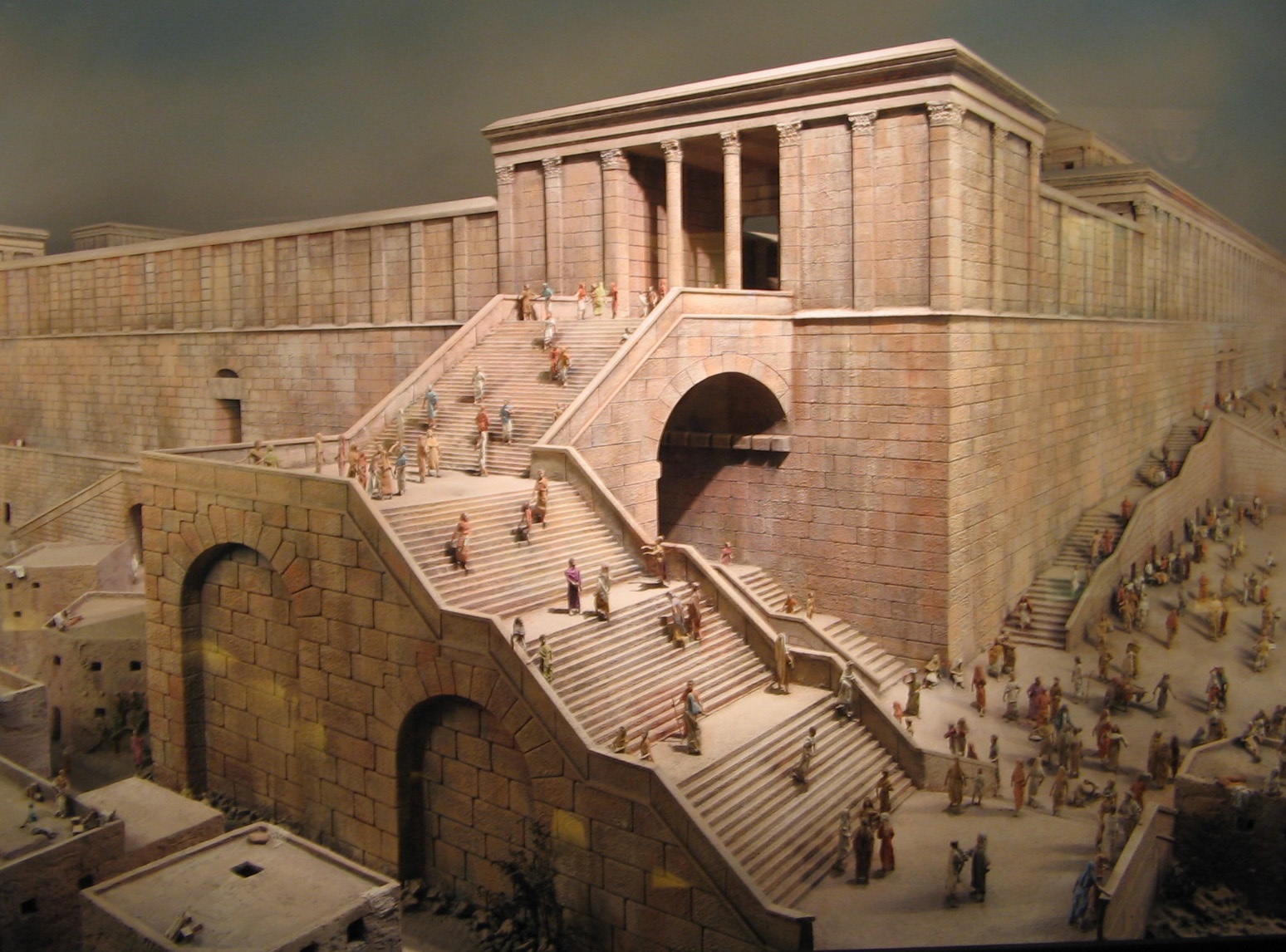
The Ancient Greeks, Romans And Even Early Muslims Recognized Jerusalem as Jewish

http://unitedwithisrael.org/wp-content/uploads/2011/05/ancient-jerusalem.jpg


Today,  Jews across the world observe Yom Yerushalayim, Jerusalem Day. It celebrates that day 44 years ago when Israeli troops reunited Jerusalem and Jews were able to pray at holy sites in the old city for the first time in almost 20 years.

One of the Palestinian Authority's famous frauds is the claim that there was never a Jewish Community in the Holy Land. They like to say that any Jewish claim to Jerusalem or the Temple Mount began with the Zionist movement 100 years ago. Of course that's a lie.

Even after the Bar Kochba revolt in 135 CE when the Romans punished the Jews  for revolting by changing the name of their country from Judea to Palestinia (after the Philistines the ancient Jewish Enemy who no longer existed) and the name of the holy city from Jerusalem to Aelia Capitolina (literally Capitoline Hill of the House of Aelius) ,  most of the world recognized the Holy Land and Jerusalem as Jewish. The truth of the matter is that even ancient Muslim writings recognized Jerusalem as a Jewish City.

For ancient Greek and Roman pagan authors, Jerusalem definitely was a Jewish city. An examination of their texts indicates the unanimous agreement that Jerusalem was Jewish by virtue of the fact that its inhabitants were Jews, it was founded by Jews and the Temple, located in Jerusalem, was the center of the Jewish religion.

These ancient texts, disprove recent attempts by Muslims and others to deny the historic connection of the Jewish people to Jerusalem and the location of the Temple in Jerusalem through fabrications and lies.


The Greeks probably were the first to record information about the customs, life styles and societies of the different peoples whom they encountered or heard about during their travels in various parts of the world. Jews were one of the many peoples whom they met and observed.[10] 


In the late fourth century BCE, several texts portray Jews in a complimentary fashion, as philosophers.[14] Throughout the third century BCE, however, less favorable comments about the Jews circulated throughout Ptolemaic Egypt, which had undergone rapid Hellenization. Outstanding among the anti-Jewish accusations was an alternative to the Biblical narrative of the Exodus.[15] One of the anti-Exodus tales, presented by the Egyptian priest Manetho (mid-third century BCE) portrayed the Jews as foreigners, descendants of shepherd-kings who had taken over Egypt and had joined with others who were ridden with disease and killed the animals which the Egyptians venerated as gods.[16] Subsequently, they were expelled from Egypt and established their own polity under their leader Moses who gave them a way of life which differed from that of the rest of mankind. Hence, the Jews were accused of xenophobia and disrespect for the gods of other nations and were viewed as practitioners of a strange way of life.[17]

Some writers recall distinctive Jewish customs, such as the absence of representations of the deity, male circumcision, dietary laws and the observance of the weekly day of rest, the Sabbath. Indeed, in 167 BCE, the Greek Seleucid King Antiochus IV ordered Jews to place an idol of Zeus in the Temple, outlawed circumcision, demanded the sacrifice of swine and forbade Sabbath observance (I Maccabees 1:41-50). He thus desired to eliminate those unique features of the Jewish religion which had been noted by pagan writers.

Anti-Exodus narratives and accusations of Jewish sacrilege against other nations' gods emerged in times of political and cultural crises and may have been a reaction to the fact that Judaism was attractive to many Greeks and Romans.[18] By the middle to late first century BCE, the Romans dominated much of the known world west of the Euphrates, with its large Greek and Jewish populations. The Romans adopted many of the Greek charges against the Jews, to which they added accusations of insubordination to Roman rule.

So embedded were the Greek libels, that even several decades after the brutal suppression of the Jewish revolt against Rome (66-70 CE) and the destruction of the Temple and of Jerusalem (70 CE), the Roman historian Tacitus repeated the standard anti-Exodus canard and expressed himself as though the Jews were still a major threat to Imperial world domination, as follows: "... Moses introduced new religious practices, quite opposed to those of all other religions. The Jews regard as profane all that we hold sacred; on the other hand, they permit all that we abhor."[19]

During the decades and centuries following the conquest of the Near East by Alexander the Great in the 330s and 320s BCE, Greek soldiers and civilians populated and colonized the entire area, established major cities, such as Alexandria in Egypt, and spread their system of local government, language, culture, art, religion, and way of life throughout the region. The Greeks promoted and advocated the adoption of their life style and mores; namely, Hellenization, which in contemporary parlance may be termed the first manifestation of "globalization." All the peoples whom they ruled and amongst whom they lived, including the Jews in the Land of Israel and the Diaspora (a Greek term), had to contend with the challenge of Hellenization through assimilation, adaptation or resistance.[13]


Even 2,000 years ago Antisemitism was popular in western cuture.


According to Manetho, for example, after Pharaoh expelled the sacrilegious Jews, a tribe of the usurper shepherd-kings called "Hyksos" dominated the land. They were joined by others who were afflicted with leprosy and diseases. "They journeyed over the desert ... they built in the land now called Judaea a city large enough to hold all those thousands of people and gave it the name of Jerusalem." In a subsequent section, Josephus again quotes Manetho as stating that after the Jews "were driven out of the country, [they] occupied what is now Judea, founded Jerusalem, and built the temple." While Josephus wrongly cites Manetho's history as attributing to Moses the building of the Temple, he mentions that Manetho notes that Moses "who framed their [the Jews'] constitution and their laws" was a native Egyptian.[20]
In an account by Hecataeus of Abdera (c. 300 BCE), Jerusalem appears toward the conclusion of his counter-Exodus account and before his description of Jewish society and practices. He attributes the expulsion of the Jews to the pestilence which the Egyptians blamed upon the presence of foreigners, not only Jews, who caused the natives to falter in religious observance. "Therefore, the aliens were driven from the country." While some went to Greece, most "were driven into what is now called Judaea ... at that time utterly uninhabited ... on taking possession of the land, he [Moses] founded, besides other cities, one that is the most renowned of all, called Jerusalem. In addition, he established the temple that they hold in chief veneration, instituted their forms of worship and ritual, drew up their laws and ordered their political institutions."[21]
Hecataeus and other writers designate Moses as founder of Jerusalem, builder of the Temple, and architect of the Jewish religion. .. For a Greek, however, it would make sense that Moses built the Temple. Logically speaking, the first major leader of people, conqueror of its land and creator of its laws and social norms had to be regarded as the founder of its most important city and shrine. It is noteworthy that Moses "the Lawgiver" figures prominently as the founder of Judaism both in Greek and Roman writings and in Josephus' defense of Judaism in the second half of his Against Apion.[22]

While the narratives noted above feature Moses as the founder of the Temple, three relatively obscure sources of the second century BCE link the Temple to King Solomon and point out his association with King Hiram of Tyre, who assisted in its construction. These sources are brief and contain no historical background or material on the Jews.[28]

Several of the selections in Against Apion which include the anti-Exodus narrative also provide descriptions of the interior and exterior of the Temple and some of its rituals. For example, Hecataeus states that in the center of the city is an enclosure where there is "a square altar built of heaped up stones, unhewn and unwrought." The Temple itself is "a great edifice containing and altar and a lamp stand, both made of gold ... upon these is a light which is never extinguished ... there is not a single statue or votive offering, no trace of a plant in the form of a sacred grove, or the like."[29] And in his account of Titus' siege of Jerusalem, Tacitus describes the Temple as "... built like a citadel, with walls of its own ... the very colonnades made a splendid defense. Within the enclosure is an ever-flowing spring."[30]

In addition to physical descriptions, the authors mention the religious aspect of the Temple which differed radically from Greek and Roman paganism. In the text preserved by Diodorus, Hecataeus mentions the priests and their duties in the Temple and even describes a worship service and sacrifice.[31] Similarly, the first century Roman historian Livy remarks that the Jews do not state "to which deity pertains the temple at Jerusalem, nor is any image found there, since they do not think the God partakes of any figure."
In the same vein, Tacitus reports that "there were no representations of the gods within, but ... the place was empty and the secret shrine contained nothing" and "only a Jew may approach its doors, and that all save the priests were forbidden to cross its threshold."[32] Cassius Dio (c.200 CE) recalls that the Jews "never had any statue of him [the deity] even in Jerusalem itself." The latter states that their temple "was extremely large and beautiful, except in so far as it was open and roofless."[33]

Hecataeus, Livy, and Cassius Dio explain the absence of representation as part of Jewish "otherness" in a factual manner. Several Greek writers, however, interpret the fact that there were no statues of the gods in the Temple not only as unusual, but also as barbaric and indicative of Jewish misanthropy. In their view, it would be inconceivable that a sacred shrine would be empty. Therefore, several authors offered their versions of what exactly stood in the Temple. Diodorus (first century BCE) writes that when "Antiochus, called Epiphanes, on defeating the Jews had entered the innermost sanctuary of the god's temple, where it was lawful for the priest alone to enter. Finding there a marble statue of a heavily bearded man seated on an ass, with a book in his hands, he supposed it to be an image of Moses, founder of Jerusalem ... who had ordained for the Jews their misanthropic and lawless customs. ... Antiochus ... sacrificed before the image of the founder and the open-air altar of the god a great sow."[34] Diodorus asserts that what stood in Judaism's holiest place was ridiculous and revolting; namely, the presence of a statue of an ass, a lowly beast of burden, whose rider had established Jewish xenophobia, and that Antiochus sacrificed an animal known by all to be forbidden to the Jews in their holiest shrine.[35]
With the Antisemitism, the Greeks also started the "blood libel"

Apion (mid-first century CE) conveys a malicious and defamatory description of the contents of the sanctuary in Jerusalem. In order to give his anti-Jewish arguments greater authority, Apion attributes this account to the well known Greek philosopher and ethnographer Posidonius (c.135-51 BCE) and the rhetorician Apollonius Molon (first century BCE).[36] As in the case of Diodorus, the invasion of Antiochus Epiphanes serves as the point of departure for the description, as follows: "Within the sanctuary ... the Jews kept an ass's head [made of gold], worshipping that animal and deeming it of deepest reverence."[37]

The narrative continues with an astonishing calumny. Apion relates that when Antiochus entered the sanctuary, he discovered a Greek imprisoned inside, on a couch next to a table laden with excellent food. The Greek hailed Antiochus as his savior. For, according to Apion, the Jews kidnapped a Greek annually, brought him to the sanctuary, fattened him up with sumptuous meals, sacrificed him, ate his flesh and then swore an oath of hostility to the Greeks.[38] While Josephus dismisses this canard as malicious rubbish and baseless lies, it is clear that the fact that Jews had no statues in their Temple in Jerusalem served as the background for the fabrication of accusations of kidnapping, human sacrifice, cannibalism and misanthropy on the part of the Jews.[39] This libel provided a basis for the attempts to deprive them of their civic rights which were contested in Alexandria in the first century CE by figures such as Apion. Hence, the Temple appears as a salient feature of pagan anti-Judaism.
Panorama of Jerusalem Taken in Early 1800s
In addition, the fact that Jews contributed annually to the Temple thereby filling it with silver and gold objects and monies was considered as a point of contention. In 59 BCE, the great Roman orator Cicero defended Flaccus, when the latter sought to prevent the Jews of the Empire from sending large sums of money to Jerusalem. Cicero describes the collection of vast amounts of gold and calls Judaism a "barbaric superstition."[40]

Tacitus also adds a financial dimension to his critique of Judaism and the Temple, complaining that other peoples join the Jews, "renouncing their ancestral religions ... sending tribute and contributing to Jerusalem, thereby increasing the wealth of the Jews."[41] While both Cicero and Tacitus mention Jerusalem as the destination for the contributions of the Jews, it is clear from the context that their intention is the Temple, which the latter describes as "possessing enormous riches."[42]

In conclusion, descriptions of the Temple form part of the accounts on Jerusalem and on Judaism. They range from the factual to the libelous and bizarre. For the Greeks and Romans, Jerusalem was famous for its Temple which served as the focal point of the xenophobic, strange and possibly menacing rites of the Jews whose contributions brought much gold into the city. The latter may have encouraged a certain amount of envy among Gentiles. After its destruction in 70 CE, the memory of the Temple persisted in the retrospective histories by Tacitus and by Cassius Dio.
Jerusalem and the Temple also appear as the site of several major historical events, mainly invasions of Greek monarchs and Roman generals. We have seen the significance of Antiochus IV Ephiphanes' entry into Jerusalem and his despoliation of the Temple which served as the pretext for anti-Jewish descriptions of the interior of the sanctuary, distortions of Judaism and slander of the Jews. Antiochus appears favorably in the works of Diodorus and Apion, cited above. Similarly, Tacitus presents Antiochus positively as the prototype of a leader who attempted to "abolish Jewish superstition and to introduce Greek civilization."[43]

It is noteworthy that an earlier capture of Jerusalem by the Greek-Egyptian King Ptolemy, son of Lagus, provided an opportunity for the obscure Agatharchides of Cnidus (second century BCE) to remark about the fact that "the people known as Jews, who inhabited the most strongly fortified of cities, called by the natives Jerusalem" lost their city because they would not defend it on the Sabbath. Josephus includes this selection in Against Apion as one of the early pagan critiques of the Jewish Sabbath which Agatharchides deemed as "folly," "dreams," and "traditional fancies about the law."[44]

In this instance, the capture of Jerusalem serves as background for the author's unfavorable comments on the Sabbath. Similarly, Cassius Dio attributes the capture of the Temple by the Roman general Pompey the Great in 63 BCE to the fact that the Jews, given their "superstitious awe" did not defend the city on "the day of Saturn" (the Sabbath).[45] Cassius Dio, however, concentrates on Roman victories and accomplishments and mentions the issue of the Sabbath in passing.

The biographer Plutarch (mid-first-early second century CE) notes the siege of Jerusalem by the Seleucid monarch Antiochus VII Sidetes in 133-132 BCE at the time of the Jewish Feast of Tabernacles. The author describes this festival at length in another work.[46] According to Plutarch, Antiochus VII provided the sacrificial animals for the Temple and allowed a seven day truce, after which the Jews submitted to him.[47] From this passage, it is clear that the inhabitants of Jerusalem are the Jews; that their Temple is located there; and their religious practices affect the outcome of the invasions of Greek rulers.

Jerusalem also serves as the venue for eliciting praise of Roman figures or glorifying the victories and history of Rome. The invasion of Jerusalem and the Temple by Pompey the Great in 63 BCE appears in several Roman sources. Livy erroneously states that Pompey was the first to capture Jerusalem and the Temple.[48] Other authors focus on the fact that Pompey neither damaged the Temple nor removed any of the gold or he vessels of the Temple.[49]

While Jerusalem and the Temple are important in these sections, they serve as the background for praise of the Roman invader. Similarly, in the works of Tacitus and Cassius Dio, the city of Jerusalem and its destruction form part of the history of the Roman Empire, and in the case of Tacitus, the accomplishments of the Flavian dynasty.[50] These historians assume Roman cultural superiority and political hegemony throughout the world and the conquest and subjugation of Jerusalem supported this world-view.

An outstanding example of the role of Jerusalem as the location for a minor event in the life of an emperor may be found in Suetonius' The Twelve Caesars, a work replete with intimate details of the public and private lives of the first twelve Roman emperors. In his biography of Titus, then commander of his father Vespasian's Imperial forces and later emperor, Suetonius writes that "in the final attack on Jerusalem he slew twelve of the defenders with as many arrows; and he took the city on his daughter's birthday, so delighting the soldiers and winning their devotion ..."[51] In this case, "the personal is political" and Jerusalem serves as the location for commemorating an event in the private life of Titus.

Finally, Cassius Dio's indispensable account of the Jewish revolt against the Emperor Hadrian (132-135 CE) designates the following as a cause of the revolt: "At Jerusalem he [Hadrian] founded a city in place of the one which had been razed to the ground, naming it Aelia Capitolina, and on the site of the temple of the god, he raised a new Temple to Zeus [Jupiter]."[52] Dio then proceeds with his report of the revolt of the Jews and its methodical suppression by the Romans.

Although the source concentrates on the course of the revolt against Hadrian, the founding of a pagan city on the ruins of Jerusalem and a pagan temple on the Temple Mount is presented as a historical fact and not simply as background for the author's views on the Jewish religion or his praise of a particular emperor. Once again, Jerusalem, the Temple and the Jews are linked together in the major Roman historical work, written over more than a century after the destruction of the city and its holiest place.
All of this happened between 500-1,000 years before Islam was founded by the Muslim prophet MohammadThere is even a Koranic passage which indicates that Jerusalem might not be so holy to Muslims, and is passed on to the Jews  "

(Koran, Sura 2:145, "The Cow")


"...They would not follow thy direction of prayer (qiblah), nor art thou to follow their direction of prayer; nor indeed will they follow each other's direction of prayer..."  

Commentators explain that "thy qiblah" (direction of prayer for Muslims) clearly refers the Ka'bah of Mecca, while "their qiblah" (direction of prayer for Jews) refers to the Temple Mount in Jerusalem.

This Koranic passage appears to show that the holiness of Jerusalem a Jewish concept, and should not be confused with an Islamic concept.

The 13th-century Arab biographer and geographer Yakut noted: "Mecca is holy to Muslims, and Jerusalem to the Jews."
On this 44th anniversary of the reunification of Jerusalem it is important to note that the Muslim claims on the holy city is a false one. All text prior to the establishment of Islam point to Jerusalem as the holy city of the Jews and home to the temples of God. And even the early texts of Islam differentiate between Jerusalem as the city holy to the Jews and Mecca the city holy to Muslims.


Today the Muslim world claims Jerusalem as theirs only as a straw dog, to further delegitimize the Jewish hold on the Holy Land. They understand even more than some Jews that Israel is the heart of the Jews, Jerusalem is the heart of Israel, and the Temple Mount is the heart of Jerusalem.  Rip out the heart and the body will die.


The Greek and Roman history is excerpted from a white paper called,"Jerusalem: Capital of the Jews The Jewish Identity of Jerusalem in Greek and Roman Sources by Rivkah Fishman-Duker. If you have the time I recommend you read the entire piece.


Footnotes follow.

[11] Herodotus, Historiae II, 104:3; Stern, I, No. 1,,2.

[12] On the twentieth-century Palestinian Arab adoption and use of the terms "Palestine" and "Palestinian" as labels of ethnic identification, which originally and for millennia were geographical terms see Bernard Lewis, "The Palestinians and the PLO: A Historical Approach," Commentary, 59 (January, 1975), 32-48. Lewis notes that the Roman renamed Judea "Syria-Palestina" and Jerusalem as "Aelia Capitolina" in 137 CE, in order to "stamp out the embers not only of the [Bar Kokhba] revolt but of Jewish nationhood and statehood ... with the same intention - of obliterating its historic Jewish identity," 32.

[13] For a summary of scholarly interpretations of the varied reactions of Jews to the impact of Hellenism and the significance of Hellenization in Jewish history of the Second Temple and Talmudic periods see L. Levine, "Hellenism and the Jewish World of Antiquity," Judaism and Hellenism in Antiquity: Conflict or Confluence (Seattle: University of Washington Press, 1998), 3-32.

[14] Momigliano, 90-91; Johanan Hans Lewy, "Aristotle and the Jewish Sage," in: Studies in Jewish Hellenism (Hebrew: Olamot Nifgashim) (Jerusalem: Bialik Institute, 1969), 15-43; Josephus, Against Apion, I, 176-183; Stern, I, VII, no. 15, 47-52.

[15] On the anti-Exodus narrative as a major motif of Greco-Roman anti-Semitism: Van der Horst; Schaefer, 15-33. Momigliano, 91-95, holds that the Greek authors either did not know of the account of the Exodus in the Septuagint, the Greek translation of the Torah or refused to acknowledge its historicity. In contrast, Erich S. Gruen maintains that these tales were not part of a concerted pagan anti-Jewish campaign and they "do not derive from Egyptian distortion of Jewish legend, but the reverse, Jewish inventiveness expropriated Egyptian myth." ("The Use and Abuse of the Exodus Story," Heritage and Hellenism: The Reinvention of Jewish Tradition (Berkeley: University of California Press, 1998), 41-73, especially 71-73. Gruen's argument, however, is neither relevant nor convincing as it is clear that the oft-repeated anti-Exodus tales indeed formed part of the essential underpinning for anti-Judaism and Jew-hatred in the Greco-Roman world. For a reaction to Gruen, see John J. Collins, "Reinventing Exodus: Exegesis and Legend in Hellenistic Egypt," Jewish Cult and Hellenistic Culture (Leiden: Brill, 2005), 44-57 and 191-193.

[16] The anti-Exodus texts by Hecataeus: Aegyptiaca, in: Diodorus Siculus, Bibliotheca HistoricaAgainst Apion I, 183-204; Stern, I, V, no.12, pp.35-44; and by Manetho, in: Against Apion I, 73-91, 93-105, 228-252; Stern, I, X, nos.19-21, 66-86. On theories concerning the date of the texts attributed to Hecataeus, see Note 21. XL:3 (Photius, Cod. 244) Stern, I, V, no. 11, 1-8; pp. 20-35; in:

[17] Van der Horst, op.cit.

[18] Daniel R. Schwartz, "Introduction," Studies in the Jewish Background of Christianity., 3-14, argues the crises which stimulated anti-Jewish writing were the influx of Jews into Ptolemaic Egypt during the third century BCE, the triumph of the Hasmonean dynasty (mid-late second century BCE) against the Greek Seleucids, Hasmonean policies toward Greeks, the subjugation of formerly Greek dominions to the Romans, and the crisis fomented by Roman Emperor Gaius Caligula's insistence on worshipping his statue. Later Roman intellectuals perceived attraction to Judaism and Jewish missionary activity as undermining their traditional way of life. Repeating the anti-Exodus material in order to support his campaign against the rights of Jews, Apion led the Greek delegation to the Emperor Gaius Caligula (37-41CE) during the period of inter-ethnic crisis in Alexandria, aggravated by the Imperial policies and the pogrom of 38 CE. On Alexandria, see: Van der Horst op.cit; Schaefer, Judeophobia, 136-160; and Collins, "Anti-Semitism in Antiquity? The Case of Alexandria," op.cit., 181-201. (Tuebingen: Mohr, 1992), 10-15, attributes the wide-spread phenomenon of conversion to Judaism, a way of life and set of beliefs which transcended territorial boundaries, to the influence of the massive acculturation to Hellenism throughout the Mediterranean world, whereby one could become Hellenized without living in Greece. On the attraction of Judaism and the success of proselytism among Greeks and Romans see Feldman, 177-341. J.H. Lewy, "The Second Temple Period in Light of Greek and Roman Literature", op.cit

[19] Tacitus, Historiae V: 4:1, Stern, II, XCII, no. 281,19, 25. According to Bloch, 221-223, Tacitus' excursus on the Jews reflects the anti-Jewish discourse of the Flavian era and beliefs in the superiority of the Roman Empire. See Goodman, 453 ff. Erich S. Gruen, however, downplays any notion of a "long-simmering hostility" as the basis of anti-Jewish expression in the wake of the revolt in Judea and attributes negative Roman attitudes to the shock of the challenge of a "laughable" people. Gruen, "Roman Perspectives on the Jews in the Age of the Great Revolt," in Andrea M. Berlin & J. Andrew Overman, The First Jewish Revolt: Archaeology, History, Ideology (London: Routledge, 2002), 27-39.

[20] Manetho's references to Jerusalem come from his Aegyptiaca, refuted by Josephus in Against Apion I, 90; I, 93; I, 228; Stern, I, X, no.19, 68-69; no. 20, 74-75; no. 21, 78,81,83.

[21] Hecataeus, in Stern, I, V, no. 11, 26-28. According to Stern (I, 20-24), Hecataeus wrote in c. 300 BCE. His Aegyptiaca comes down to us from the first century B.C.E. work of Diodorus Siculus via the tenth-century Bibliotheca of Photius. Diodorus may have altered the original text. In Against Apion I, 183-204, Josephus includes a selection entitled "On the Jews" by Hecataeus, which was regarded as the earliest Greek description of the Temple and Jerusalem. Several scholars have challenged the authenticity of the passages in Josephus. Stern presents the commonly accepted opinion that "Josephus had before him a Jewish revision, however slight" which was more pro-Jewish than the original Hecataeus (I, 23-24). However, an exhaustive study of the material which Josephus attributes to Hecataeus, asserts that it was written by an Egyptian Jew of the late second- early first century BCE and not by Hecataeus at all, see Bezalel Bar Kochba, Pseudo-Hecataeus' On the Jews: Legitimizing the Jewish Diaspora (Berkeley: University of California Press, 1996), especially 110-121, 249-252. This view suits Erich S. Gruen's later thesis (Note 15), although it is not universally accepted. See also Bloch, 29-36.

[22] On Moses in pagan writing: Feldman, Jew and Gentile, 232-287. On the Greek logic behind the identity of the founder of the religion, conqueror of the land and builder of the shrine see Bloch, 34, Note 38. Josephus, Against Apion II: 154-178, 352-365. Josephus argues that Moses is the oldest legislator in human history and that his laws are superior to those of other peoples and they are accessible to all.

[23] Diodorus, Bibliotheca Historica XXXIV, 1: 1,2, 3, in : Stern, I, XXXII, no. 63.

[24] Lysimachus, in: Against Apion I, 304-311; Stern, I, LXII, no.158, 383-386. Stern notes that Lysimachus' reference to "Hierosyla" is an example of the etymology of a name of a nation (386, no.311).

[25] Tacitus, Historiae V, 2:1-2; Stern, II, XCII, no. 281, 17-18, 24-25. Stern points out that Tacitus' references to "Hierosolymus "and "Iuda" resemble those of his contemporary Plutarch (33, Note 2:2). For Plutarch: Stern, I, XCI, No. 259, 563..

[26] Tacitus, Historiae V, 3: 1-5:5; Stern, II, XCII, no. 281, 18-19, 25-27.

[27] Tacitus, Historiae V, 6:1-13:4; Stern, II, XCII, no. 281, 19-23, 27-31. Bloch, 102-107, points out correctly that Tacitus devotes hardly any attention to the political history of Judea prior to the Great Revolt, siege of Jerusalem by Titus. It simply did not interest him. The otherness of the Jewish religion, which he knew from the Jews of Rome, however, merited his critique (Bloch, 222-223).

[28] Menander of Ephesus, in Against Apion I, 126; Stern, I, XX, no.35, 120-121; Dius, in Against Apion I, 114-115; Stern, I, XXI, No. 36, 124-125; Laetus, in Stern, I, XXIII, No.39, 128-129. Perhaps these authors were acquainted with the Biblical account which describes the relationship between Solomon and Hiram and the latter's role in providing materials for the Temple or obtained their information from an unknown Phoenician source.

[29] Hecataeus "On the Jews", in Against Apion I, 198-199; Stern, I, V, No.12, 36-37, 39. See Note 21 on the problems relating to this passage. Bar Kochba, 153-154, 160-168, states that the author, Pseudo-Hecataeus, an Egyptian Jew at the turn of the first century BCE, based his description on Greek literary models of temples and was acquainted with pagan temples and their surroundings. Therefore, the Temple in Jerusalem is not the structure described in the text.

[30] Tacitus, Historiae V:12:1 (Stern, II, XCII, no. 281) 22,30.

[31] Hecataeus, in Diodorus, Aegyptiaca, Bibliotheca Historica XL, 3, 4-6; Stern, I, V, No. 11, 26-28.

[32] Livy, in Stern, I, XLVI, No. 133, 330. Tacitus, Historiae V: 8:1, 9:1; Stern, II, XCII, No. 281, 21, 28. Tacitus relates that only after Pompey's invasion of the Temple in 63BCE did the emptiness of the sanctuary become common knowledge. He does not repeat the Greek calumnies and rumors about the sanctuary.

[33] Cassius Dio, Historia Romana XXXVII, 17:2-3; Stern, II, CXXII, No.406, 349, 351.

[34] Diodorus, Bibliotheca Historica, XXXIV:2-4; Stern, I, XXXII, No.63, 182-183. On the pagan accusation of Jewish ass worship see Schaefer, 58-62.

[35] This account differs from the Jewish versions of Antiochus IV invasion of Jerusalem and desecration of the Temple of I and II Maccabees. While all stress Antiochus' attempts to abolish Jewish practices, Diodorus states that after taking tribute from the Jews and dismantling the walls of Jerusalem, he left the Jews alone. He does not mention the Jews led by Judah the Maccabee taking the Temple from Antiochus' soldiers and supporters and consecrating it.

[36] Posidonius, in: Against Apion II, 80, 89-96; Stern, I, XXVIII, No. 44, 145-146; Apollonius Molon, in: Against Apion II, 80, 89-96; Stern, I, XXIX, No. 48, 12-154; Apion, in: Against Apion II, 80-90-96; Stern, I, LXIII, no.170, 408-412.

[37] Ibid.

[38] Ibid.

[39] An explanation of the origins of Apion's accusation of cannibalism on the part of the Jews may be found in Stern, I, 412, Note 89. See also Schaefer, 62-67. Periodic kidnapping and killing of a Gentile, of course, occurs in the medieval blood libels, the first of which took place in Norwich, England in 1144. There are vast differences between Apion's claims and the context of blood libels in Europe, in which innocent Christian children appear as the victims, murdered by Jews who use their blood for Passover rituals.

[40] Cicero, Pro Flacco 28:66-69; Stern, I, XXXIV, No.68, 196-201. On Cicero's attitude to the Jews see J. Lewy, "Cicero and the Jews in the Pro Flacco," op.cit ., 79-114. According to Feldman, 70, the Jews were so loyal to Jerusalem and the Temple that they were prepared to defy a Roman edict and send large sums of money to the Temple.

[41] Tacitus, Historiae V, 5:1; Stern, II, XCII, No. 281, 19, 26. Both Bloch, 93 and Feldman, 110, state that the fact that the numerous proselytes also paid the annual half-shekel to the Temple in Jerusalem resulted in the accumulation of vast sums of money collected throughout the Empire and sent to the Temple treasury, thus causing Gentile envy of Jewish wealth and antipathy toward converts to Judaism.

[42] Tacitus, Historiae V, 8:1; Stern, II, XCII, no. 281, 21, 28.

[43] Tacitus, Historiae V, 8:2; Stern, ibid.

[44]Against Apion I, 209-211; Stern, I, XVII, No. 30a, 106-107.

[45] Cassius Dio, Historia Romana XXXVII, 15:2:1-4: Stern, II, XCII, No. 281, 21, 28. Josephus praises and describes at length the fact that the Jews did not put up defenses around Jerusalem during Pompey's campaign in order not to desecrate the Sabbath and thus facilitated his invasion of the city and the Temple (Jewish War I: 145-147; Jewish Antiquities XIV: 63-65).

[46] On the Feast of Tabernacles: Plutarch, Quaestiones Convivales IV: 6:2, in: Stern, I, XCI, No.258, .553-554, 557-558. On Plutarch's description of the festival: Schaefer, 53-54.

[47] Plutarch, Regum et Imperatorum Apophthegmata; Stern I, XCI, No. 260, 563-564. For a similar reference to the siege of Jerusalem by Antiochus VII Sidetes on the Feast of Tabernacles see Josephus, Jewish Antiquities XIII: 242-248. Josephus, however, points out that Antiochus withdrew the siege, whereas Plutarch states that the Jews were amazed and placed themselves in his hands.

[48] Livy, Periochae CII; Stern, I, XLVI, No. 131, 329.

[49] Cicero states that Pompey "'laid his victorious hands on nothing in that shrine,'" Pro FlaccoHistoriae V, 9:1; Stern, II, XCII, No.281, 21, 28, notes that during Pompey's invasion "the walls of Jerusalem were razed and the Temple remained standing." Cassius Dio, Historia Romana XXXVII, 15:2:1-4; Stern, II, CXXII, no. 406, 349-350, briefly describes the difficulty of capturing the Temple, but unlike the others, writes that "its wealth was plundered." In both the Jewish War I: 152-153 and Jewish Antiquities XIV: 72, Josephus praises Pompey's virtuous character and the fact that he touched none of the gold and Temple vessels. 28:67; Stern, I, XXXIV, No. 68, 196-197; Tacitus,

[50] Tacitus; Stern, II, XCII, Nos. 273-294,1-93; Cassius Dio; Stern, II, CXXII, Nos. 406-441, 345-407. On Tacitus' depiction of Vespasian and Titus in light of the Jewish revolt, see Bloch, 137-142.

[51] Suetonius, The Twelve Caesars, "Divus Titus" 5:2; Stern, II, XCIV, No. 317, 125-126.

[52] Cassius Dio, Historia Romana LXIX, 12:1; Stern, II, CXXII, No. 440, 391-392.

[53] Against Apion I: 197; Stern, I, V, No. 12, 36, 39. Bar Kochba, 110-113, argues that this description of a walled and fortified city serves as part of the proof of a later date and a different author of the passage attributed to Hecataeus by Josephus.

[54] Against Apion I:209; Stern, I, XVII, No. 30a, 106-107.

[55] Timochares, in: Eusebius, Praeparatio Evangelica IX:35:1; Stern, I, XXV, No. 41, 135. Stern explains the source of the exaggerated figures.

[56] Xenophon of Lampsascus, in PE IX: 36:1; Stern, I, XXVI, No. 42, 138.

[57] Pliny the Elder, Naturalis Historia V:71: Stern, I, LXXVIII, No. 204, 469, 471-472.

[58] Tacitus, Historiae V, 8:1; Stern, II, XCII, No. 281, 21, 28. On Tacitus' physical description of Judea and Jerusalem in comparison with his geographical data about other locations, see Bloch, 101-102.

[59] Tacitus, Historiae V, 11:3; Stern, II, XCII, no. 281, 22, 30. The most detailed physical description of Jerusalem and the Temple prior to the siege of Titus may be found in Josephus, The Jewish War, V, 136-247.

[60] Cassius Dio, Historia Romana LXVI, 4:1; Stern, II, CXXII, No. 430, 371, 373.

[61] Valerius Flaccus , Argonautica, I, 14; Stern, I, LXXIX, No. 226, 504-505; Martial, Epigrammata, VII,82, 7; Stern, I, LXXXIV, No. 242, 526.

[62] Juvenal, Saturae, VI, 542-544; Stern, II, XCIII, No. 299, 100-101. On the threat of Judaism as perceived by the Romans: Stern II, 94-95,106-107. Both Tacitus and Juvenal, displayed their contempt for proselytes (Bloch, 134-135) and their dislike of all peoples, whether Jews, Germans or Greeks, who did not behave like Romans (Goodman, 110, 160; Bloch, 136-137).

* * *

Rivkah Fishman-Duker is a Lecturer in Jewish history at the Rothberg International School of the Hebrew University of Jerusalem and the Israel School of Tourism. She teaches courses on the Second Temple and Talmudic (Roman\Byzantine) periods in both institutions and has published several articles on Byzantine historiography of Jews in the ancient period and numerous book reviews of scholarly works on ancient Jewish and Byzantine history.